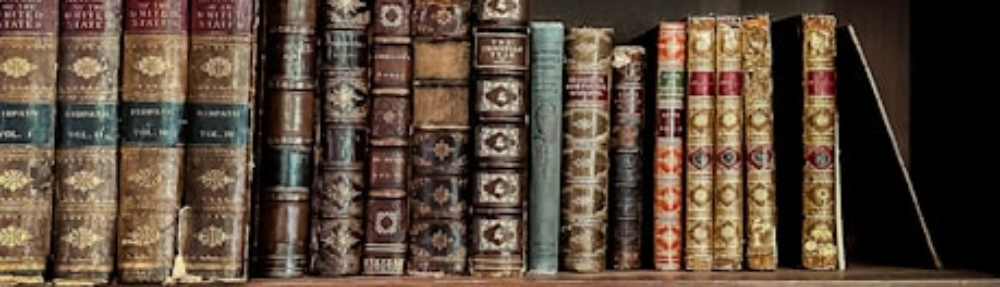
This class offers an opportunity to understand our contemporary cultural moment by returning to the archives of American literature. Nineteenth-century America was a time of transformation and turmoil. Industrialization, westward expansion, civil war, emancipation and suffrage, as well as revolutionary innovations in technology—from trains to telegraphs, electricity to land-based oil, and wood-pulp paper— all have parallels and points of connection to the political, economic, social, technological, and literary challenges of our own time. Rather than striving for breadth or chronological coherence—this is not a survey of 19th Century American Literature—this class reads a curation of select texts by central American writers (Ralph Waldo Emerson, Frederick Douglass, Herman Melville, Elizabeth Keckley, Emily Dickinson, Walt Whitman, Henry James, and more) in order to understand how the past not only informs but illuminates the present.
This class is designed for our AI-informed 21st-century. We give ourselves over to reading and readings, and we do so with an intentional writing practice. This class is specifically designed to not involve AI—to be a respite from it—so enjoy this opportunity!
READING & READINGS: This class reads the past carefully and closely, not for coverage or information but for feeling and human connection. We start from the understanding that reading—is about attention—paying attention to what moves us and how it moves us. Paying attention to selected “readings” enables us to recognize how the past speaks to us and for us.
You MUST bring a printed copy (book or paper) to class. Digital editions will be not accepted in the classroom.
WRITING: Our 19th-century authors understood writing to be an act of self-construction and reflection, an act of community and democratic service. Writing is not, for them and for us, about “content production.” Learning from them, we forgo AI and a focus on perfect writing and instead use writing as a means of reading and learning. Our assignments support this practice.
- We will not be using digital readings or readers. All classroom conversation will use printed books.
- We will keep a commonplace book that will become the site of your learning and development. Handwriting and physicality of writing will be foregrounded. More on that below…
Learning Outcomes:
In this class, you will
- Learn to close read literary texts for aesthetic, theoretical, and historical components.
- Situate literature in historical contexts so as to understand how cultural production constitutes and constructs history and society.
- Examine how a work of literature achieves canonical value and status by way of external, social, and political forces.
- Trace longer histories of contemporary issues back to mid-19th century America: including tyrannical leadership, polarized perspectives, race/gender/class conflicts, ecological destruction, and more.
- Hone your skills as a critical thinker, listener, and writer by focusing on the development of a thesis statement and the ability to prove it through textual explication.
Administrative Information
| Email: jpressman@sdsu.edu *Do not expect a response within 24 hours | Course Website: https://website-48815316.jrw.ilc.mybluehost.me/ |
| Office: AL 261 Office hours: Thursdays, 1-2:30 pm= drop in * Additional times and dates by appointment; email me for an additional appointment (in-person or on Zoom) out of the regular office hours timeslot. | Course Meeting: T/Th 11-12:15 Room: Hepner Hall 206 |
| English Subject Librarian (for help with research, citations, bibliography, etc.) | Markel Tumlin mtumlin@rohan.sdsu.edu |
NOTE: This syllabus is subject to change… and probably will change!
READINGS
**You must use a printed, not a digital edition, to class**
Ralph Waldo Emerson,Self Reliance (1851), Jessica Helfand, editor. Thames & Hudson (Norton, 2021). *you must have this edition*
Frederick Douglass, Narrative of the Life of Frederick Douglass, an American Slave (1845)
[Penguin classics, but any edition will do]
Henry David Thoreau, Walking (1862) [any edition will do]
Emily Dickinson, Final Harvest- collected poems (Little Brown and Co., 1962)
Walt Whitman, The Portable Walt Whitman (Penguin, edited Michael Warner)
Herman Melville, Bartleby (1853) [any edition will do]
Edgar Allen Poe, selections of short stories [any edition will do]
Elizabeth Keckley, Behind the Scenes; or, Thirty Years a Slave, and Four Years in the White House (1868) (Eno Publishers, 2016).